
Having worked on M&A and financing deals, and seeing thousands of searches each week through Regy, I consider the below to be the main risks - search due diligence has limits and those limits are easy to overlook when a deal is moving quickly. This is especially true when teams are relying on a mix of registry services and internal processes without a consistent approach.
1. Registry searches are not updated before closing
Failing to update searches before closing can result in missing new registrations, litigation, or insolvency events that arise between file opening and closing.
Searches are often ordered near the start of a file so that the team can get an early sense of the diligence picture and begin addressing any issues before closing. Running searches early is important, but it may also create a false sense of comfort if signing and closing are separated by any extended period of time.
Between the first round of searches and closing, a new PPSA registration can be registered, a new lawsuit can be started, a writ can be issued, or more catastrophically - a bankruptcy. None of that will be reflected in the original search package - the timing of a search is critical to what it reveals. What shows as a “clean” search today could have very different results tomorrow.
Proper closing searches can be a lifesaver for your client - and consequently, a potential deal killer - before documents are signed and money is wired.
2. Registry searches are only run by another firm on the deal
Relying solely on another firm’s searches can introduce risk if scope, timing, jurisdictions or names are not independently verified.
It’s common practice for one firm to run the main due diligence searches and circulate them to the other side or to the rest of the deal team. This can be perfectly efficient, and in many cases it is a normal part of the workflow. However, it should not replace a close review of what was actually searched.
Every search depends on its scope, timing, jurisdictions, and names. If another firm ran the searches, it is still important to understand when they were run, what exact names were searched, whether all business names were included, whether all correct jurisdictions were covered, and whether the searches were broad enough for the size and complexity of the deal.
The same caution applies when searches are being ordered through a service provider that does not have deep registry search expertise. In this situation, service provider problems can arise through simple miscommunication, improper scoping, misunderstandings about search logic and registry functionality. These risks can be compounded when registry services are treated as purely administrative tasks rather than part of the legal analysis.
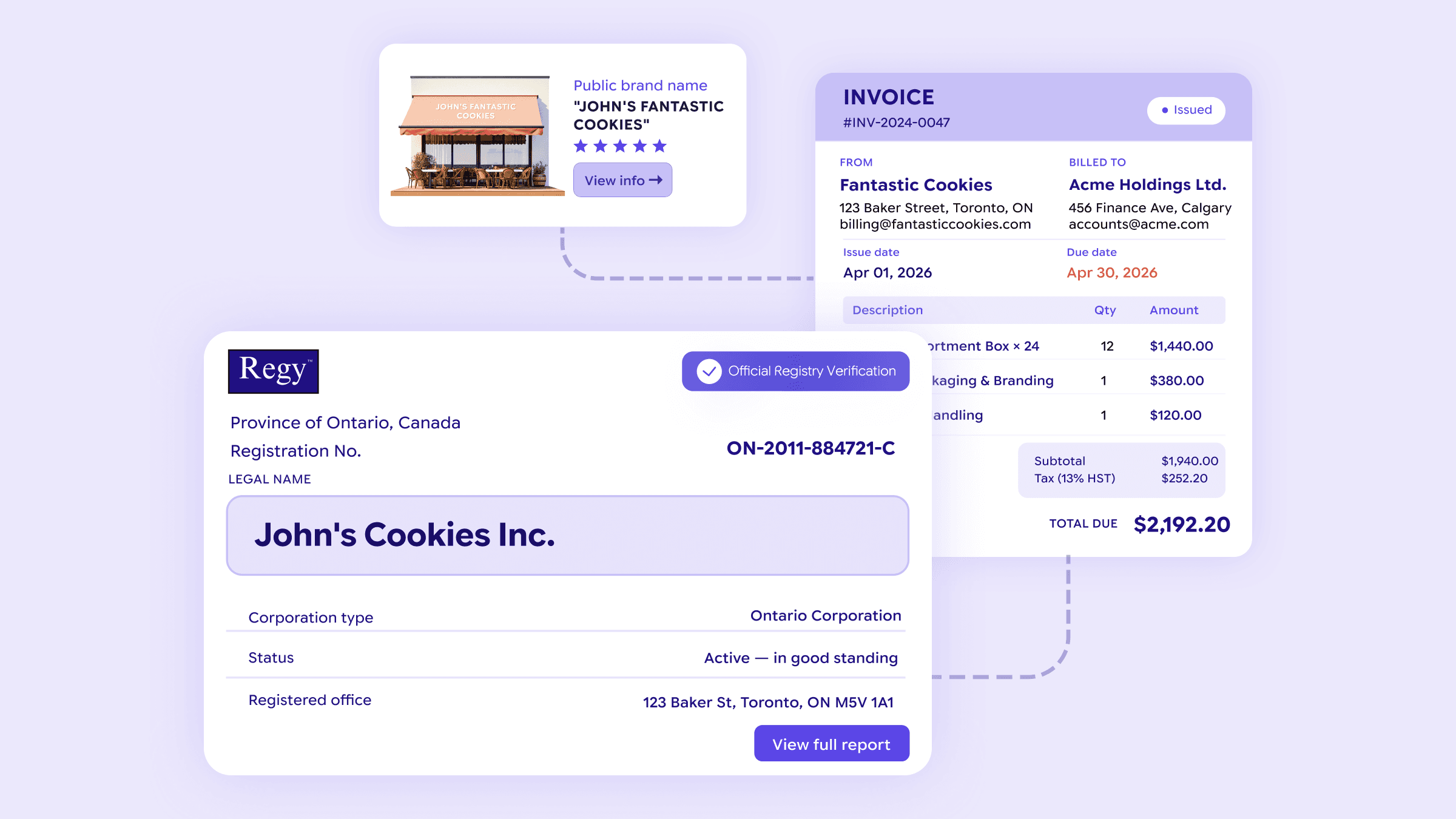
3. The correct legal and business names are not verified
Incorrect or incomplete names are one of the most common reasons search results are inaccurate or incomplete.
If the legal corporate name is incomplete, outdated, misspelled, or inconsistent with registry records, the results for many types of searches will be incomplete or inaccurate. The same is true where a business operates under one or more business names that differ from the corporate name and those names were never identified at the outset. Using a search platform like Regy can help you verify corporate and business names at the outset of your deal before searches are conducted.
It’s important to note that registry records do not always reflect the correct legal name, which, consequently, means finding every relevant record is challenging. It is not unusual to see litigation issued against a slightly misspelled version of a party’s name (this is again why using a service provider with deep registry expertise is crucial). PPSA registrations can raise similar issues - a whole topic for another day.
A company may be known publicly by one name, invoiced under another, and be legally incorporated under a third. If a search only captures one of those names, the search package may look “clean” while still missing relevant information. For more on how strict matching logic can affect search results, see our article on Bank Act searches.
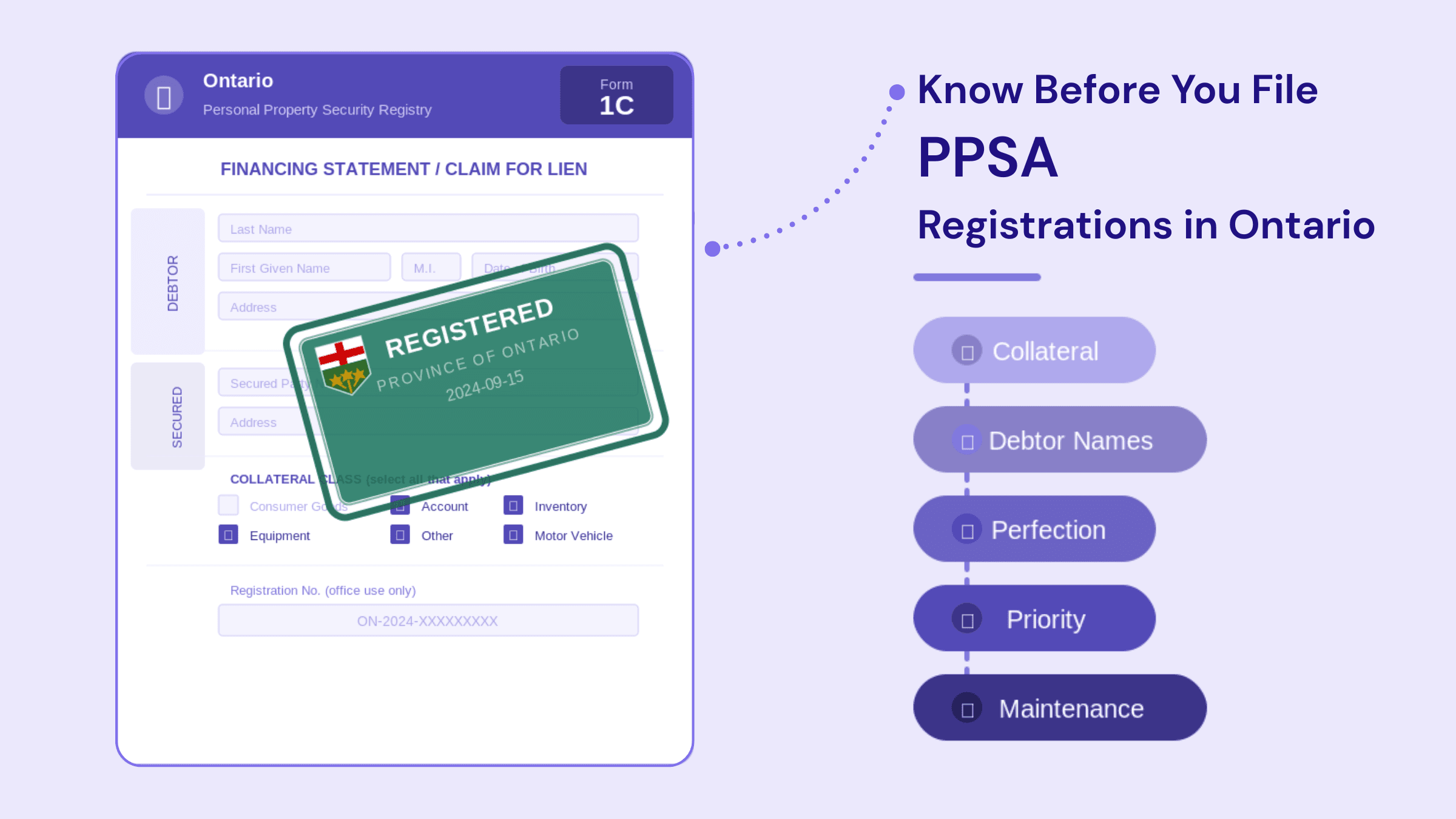
4. PPSA searches are not broad enough
Narrow PPSA searches can miss registrations that materially impact a deal, even when results appear “clean.”
For corporations, the issue can arise where the entity has both English and French names. In this situation, searching only one version may not be enough. Regy generally recommends searching the English version, the French version, and combined English/French and French/English forms as well. Trying different potential spelling variations is also advisable.
For individuals, the same concerns appear. In Ontario, a broad Individual Non-Specific search can be important because a tighter search (i.e., an Individual Specific search) may miss registrations that a broader one would catch. If the individual uses different spellings, shortened names, anglicized names, or alternate names, those should also be considered. In practice, official government ID is usually the best starting point. If the search name is taken from an email signature, a draft agreement, or informal instructions, the risk of a discrepancy increases.
Most legal professionals have heard at least one horror story of a PPSA registration not being discovered until after closing.
5. The limits of the search are not fully considered
All registry searches have structural and timing limitations that can affect the completeness and accuracy of results.
These limits include the currency date of the registry records, possible filing or update delays, the legislative/regulatory nuances of each jurisdiction searched, and each registry’s own search and matching logic.
Keep in mind - some registries are built on largely self-reported information, like corporate registries, where officers or directors file the information, while other types of registries reflect third-party proceedings or more official enforcement records like OSB bankruptcy records. A corporate registry showing that a company is active does not necessarily mean the company is compliant or free of issues - director and officer information may be outdated and business name registrations may have lapsed.
When reviewing your searches, keep in mind how records and information are added or updated on the public record. Understanding how different registry services operate, and their underlying limitations, is critical when interpreting results.
Regy’s approach to search due diligence using legal software
Regy believes search due diligence works best when it is treated as part of deal judgment rather than just deal administration.
This means:
scoping searches based on the size and complexity of the deal;
asking about business names and alternate names;
verifying legal names before searching;
searching all relevant individuals, entities and jurisdictions;
reviewing search reports provided by someone else with care; and
updating searches before closing.
Using modern legal software and integrated registry services like Regy can support this approach by improving consistency, reducing manual errors, and streamlining how search results are reviewed and reported on across a deal.
Key takeaway
There’s no way to completely eliminate deal risk, but proper searching does significantly reduce the chances of closing on a bad deal.
The information provided on this website is for general information purposes only and does not constitute legal advice. It is not intended to be a substitute for legal advice from a qualified lawyer. Regy is not a law firm.