
Key takeaways
There is no such thing as a simple, universal “background check” on an individual in Canada. Public records can be searched for a connected purpose; everything else needs the person's consent.
There is no public criminal records database. A police record check is requested by the individual who receives the results.
A consumer credit report can be released only for purposes compliant with provincial law and only upon the consumer's written consent.
A clear result means the records you searched had nothing. It does not mean the person has nothing.
There is no standard “background check” on a person in Canada. There are public records that anyone can search, and there is non-public information that nobody can obtain without that person's consent, and the line between them is the whole subject. Two common questions people ask are whether you can check someone's criminal record and whether you can pull their credit score. The honest answer to both is no. What follows is why, and what you can actually do.
The line is consent
Public records are records a statute requires to exist and makes available to anyone. PIPEDA exempts these records from the usual consent requirement, but only where the use relates "directly to the purpose for which the information appears in the registry," as the Privacy Commissioner has emphasized.
Public record: anyone can search | Personal information: needs the person's written consent |
|---|---|
Civil court files: whether a person has sued or been sued | Criminal record: a police check the person requests about themselves |
Bankruptcy and insolvency: every filing in Canada since 1978 | Credit report: released only for a listed purpose, upon the consumer's consent |
PPSA registrations: secured lending against the person | Driving record: the driver's written consent |
Land titles: ownership and registered charges | Employment and education: no public record exists |
Corporate filings: directorships of a company you already know | Immigration status: held federally, not searchable |
Writs: any judgments being enforced against a person | Tax and income records: held by the CRA, provided only by the person |
The person of interest can obtain anything in the right column and hand it to you. You cannot obtain it on your own.
What can you learn about a person in Canada through public information?
You can learn more than you’d expect about a person in Canada using public information, but there are significant protections in place to protect an individual’s private information. Ontario's rule on civil court files is that the public is "entitled to see any current list maintained by the court of civil proceedings commenced, any documents filed in a civil proceeding, or any judgments entered," subject to statutory restrictions and court orders.
For example, a court search can show whether someone has sued or been sued, though it may be difficult to ascertain the identity of the individual if their date of birth isn’t present in the search results. In contrast, The Office of the Superintendent of Bankruptcy holds every bankruptcy and proposal since 1978, and individual search records will contain a date of birth - especially valuable information when determining if the records truly match a subject of a search.
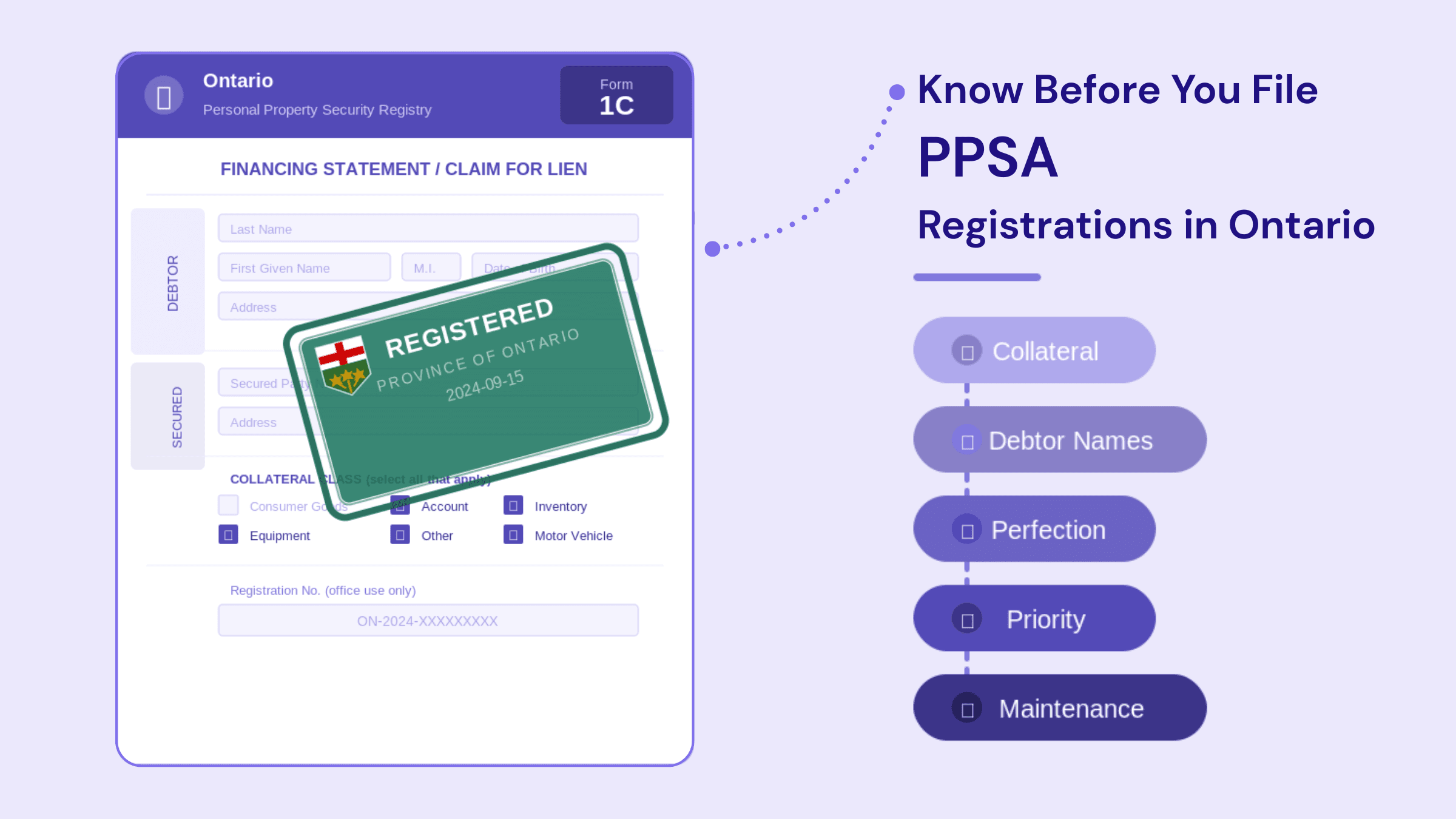
Another example is the PPSA; though you may include the date of birth in the search criteria, you can conduct an Ontario PPSA search against an individual with as little information as just their first and last name, and any registrations found with a matching name will include their date(s) of birth and address(es).
Can you check someone's criminal record in Canada?
Put simply, no. The national repository sits behind the Canadian Police Information Centre (CPIC), which only police and authorized agencies can query. What exists instead is a police record check the individual requests on themselves. Ontario's Police Record Checks Reform Act, 2015 permits three types: a Criminal Record Check, a Criminal Record and Judicial Matters Check, and a Vulnerable Sector Check. RCMP policy requires "informed consent in writing from the applicant" and prohibits releasing the result "to a third party without the applicant's prior informed consent." Screening companies transmit the request; they do not receive the result.
In contrast, criminal charges are public because courts are open, so an active matter can appear in a court case search. A conviction that has run its course, or one under a record suspension, will not. A court search is not a criminal record check and should never be described to a client as one - finding active cases/charges is not the same as guilty verdicts/convictions.
Credit reports
Consumer credit reporting in Canada is provincial. Ontario's Consumer Reporting Act allows an agency to release a report only for a “permitted purpose”: extending credit, tenancy, employment, insurance, a direct business need related to the consumer, or certain statutory eligibilities. In practice, that means the consumer's own written consent. Equifax shares: "No one can access your Equifax credit report unless they have a permissible purpose." Due diligence on a counterparty is not one.
A lender can usually obtain a borrower or guarantor's credit report because they consent to it in the commitment letter; the law firm cannot order it independently. Even with consent, the Act drops most adverse items after seven years, including judgments, unless the creditor confirms they are unpaid.
Without consent, public records offer a partial proxy rather than a full credit picture. Bankruptcies and proposals show amounts in default, judgments and writs show amounts owed and being enforced, and PPSA registrations show secured lending but rarely an actual amount. None of these public records can establish a credit report or score, but they do significantly impact an individual’s credit report.
What a clear result means
A clear search means the records you searched contained nothing, in those jurisdictions, under the criteria used. Someone who has lived in three provinces may have three sets of records, under rules that vary: Alberta, British Columbia and Quebec have their own private-sector privacy acts, Quebec's being the strictest. Importantly, in general, a name without a date of birth is a potential hit, not a validated matching result. As we covered in Where search due diligence can go wrong on M&A and financing deals, the same scoping rules apply when searching an individual.
Regy's approach to searching individuals in Canada
Regy uses expert experience to search public records with the nuance they deserve. On a file involving an individual, Regy generally recommends ordering court, insolvency, security, and writ searches, scoped to every jurisdiction the person has been connected with. For more on individual insolvency searches, see our article Understanding BIA and CCAA searches in Canada.
Frequently asked questions
Can a law firm run a criminal record check on someone?
No. The individual requests it, consents in writing and receives the result. A firm (or the firm’s client) can then ask the individual for it as a condition precedent for closing.
Can you pull a credit report on someone for due diligence?
No. Reports are released only for listed purposes upon the consumer's written consent. PPSA, bankruptcy, writs and court searches are the public-record alternatives.
Can I rely on a clear search on a guarantor or principal?
Only for what was searched. A clear result covers the registries, jurisdictions and name variations searched, nothing more.
Caveat: This article describes the general framework for searching individuals in Canada, with Ontario examples. It is not a full account of PIPEDA, provincial privacy and consumer reporting statutes, the Police Record Checks Reform Act, or the access rules of any particular registry or court, each of which has its own requirements and limits.
The information provided on this website is for general information purposes only and does not constitute legal advice. It is not intended to be a substitute for legal advice from a qualified lawyer. Regy is not a law firm.